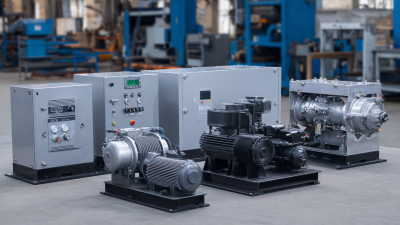
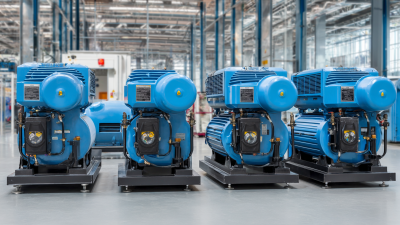
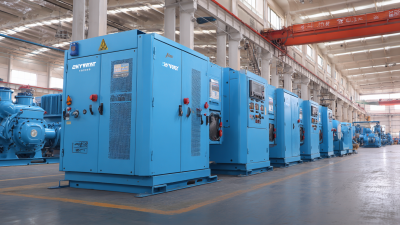
Choosing among the top industrial compressors is not a contest of horsepower alone. Global buyers must match a machine to real demand: operating hours, pressure requirements, air quality, site conditions, and service access. A compressor running beside a dusty production line faces different demands from one supporting a clean packaging room. Small details matter.
Energy-efficiency expert Amory Lovins is often credited with the reminder, “The cheapest energy is the energy you don’t use.” That principle matters when comparing compressor models. Purchase price is visible. Electricity use, maintenance intervals, and downtime costs can be less obvious. A variable-speed unit may suit fluctuating demand, while a fixed-speed model may be appropriate for steady loads. Neither is automatically the better choice.
This guide looks at how buyers can compare compressor types, capacity, efficiency, controls, and lifecycle support. It also considers practical concerns, including replacement parts, technician availability, and performance data that can be checked against actual operating needs. A specification sheet can help. It cannot tell the whole story. I would be cautious about rankings that crown one machine without explaining its test conditions or intended duty. The right shortlist starts with measured demand, not a brand name. Even then, estimates can miss seasonal changes; verify them against the plant’s own load profile before committing.
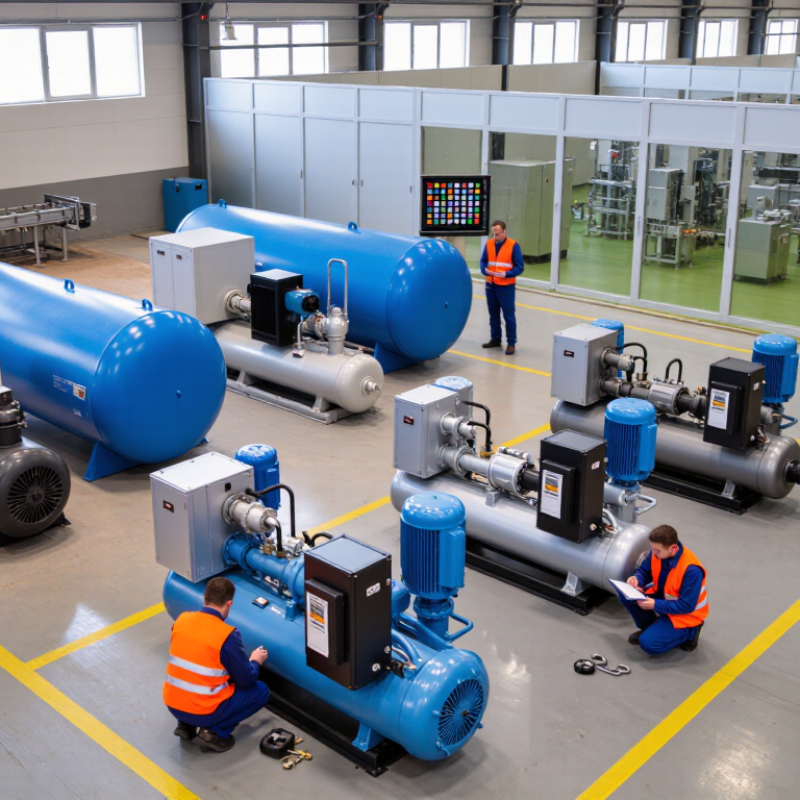
Industrial compressors move air or gas by raising its pressure, but pressure and flow solve different problems. Pressure, measured in bar or psi, helps overcome resistance in pipes, filters, and tools. Flow describes how much gas reaches equipment over time. A system can show adequate pressure at the compressor yet starve a tool when several users draw air together. The hiss at a distant hose can be a clue.
Common designs include reciprocating, rotary-screw, and centrifugal compressors. Reciprocating units use pistons and suit intermittent demand or higher pressures. Rotary-screw machines provide steady output for many continuous-duty applications. Centrifugal models use rotating impellers and are often chosen for large, stable flow requirements. The U.S. Department of Energy’s Improving Compressed Air System Performance sourcebook estimates compressed air uses about 10% of industrial electricity, and can exceed 30% at some facilities. That makes leaks, poor controls, and oversized equipment costly. Still, a single “best” compressor cannot fit every plant; demand changes by shift, and estimates can miss short peaks.
Tips: Record pressure and flow where equipment actually connects, not only at the compressor. Check demand during busy production periods. Then compare those readings with the compressor’s operating range. Leave room for uncertainty: one quick measurement may not capture a full shift.
Choosing an industrial compressor starts with the air demand curve, not the nameplate rating. The U.S. Department of Energy’s Improving Compressed Air System Performance: A Sourcebook for Industry reports that leaks can waste 20–30% of compressor output in poorly maintained systems. That is costly air.
Rotary-screw machines suit steady, medium-to-high demand, such as multiple production lines running through a shift. Variable-speed models can follow changing loads, though controls cannot fix poor system sizing. Reciprocating compressors fit intermittent use and higher-pressure tasks, but bring more noise and pulsation. They need room to breathe.
Centrifugal designs deliver large, steady flows in major plants; they are less forgiving when demand swings sharply. Scroll compressors run quietly and suit smaller, clean-air applications, but their capacity is limited. No design wins everywhere. Buyers should compare measured flow, pressure, duty cycle, service access, and energy use at the actual operating point. A short demand log can reveal more than a polished specification sheet. One awkward detail: leaks and pressure drops may distort that log, so inspect the piping before committing.
Approximate discharge pressure ranges by compressor design
These indicative ranges show pressure capabilities found across industrial applications, not fixed limits for every machine. Actual operating pressure depends on the model, number of stages, and system design. Rotary-screw and scroll compressors commonly serve lower-pressure duties; reciprocating designs cover a broad range, including high-pressure applications; centrifugal designs are often selected for high-volume flows at moderate pressures.
For industrial compressor selection, compare ISO 1217 free-air delivery (FAD), not just motor power or advertised displacement. FAD describes the air actually delivered under stated test conditions. Check the reported pressure and inlet conditions before comparing units; figures measured on different bases can mislead.
Start with the plant’s real demand profile. A packaging line may draw heavily during short cycles, while a workshop uses air more steadily. Record peak flow, typical flow, operating hours, and which machines run at the same time. Peaks matter. A compressor sized only for average demand may struggle when several tools start together. Oversizing can also increase energy use, especially when demand stays low.
Allow for leaks and future changes, but base the allowance on measured conditions where possible. A pressure log and flow survey can reveal whether demand is steady or sharply variable. Match compressor capacity to that profile, then assess control response and the required operating pressure. A spreadsheet can still miss irregular shifts or seasonal loads. Keep some uncertainty visible; the first estimate is not always the final one.
Compressed-air equipment can consume a surprising share of factory electricity. Estimates often place it at 10–30%, but the actual figure depends on production, system design, and operating hours. A leak near a coupling may sound minor on a noisy floor; overnight, it can waste energy without anyone noticing. Excessive pressure can also increase compressor demand, while clogged filters may create avoidable pressure loss. The numbers matter. Still, a utility bill alone rarely shows which problem is responsible.
Tips: Record compressor power and system pressure during a normal shift, then compare readings during breaks or overnight. Check for leaks with suitable detection methods, inspect filters, and note how long compressors run unloaded. Avoid lowering pressure blindly; tools at distant workstations may stop performing reliably. Short trials help.
A practical review pairs electrical data with air demand at points such as packaging lines and tool stations. A temporary power meter and pressure logger can reveal demand peaks and whether compressors keep running after production stops. Results need context: a maintenance shutdown, seasonal heat, or unusual output can skew a week of readings. Measurements are not perfect. Repeat them, and rank possible fixes by verified savings, production risk, and maintenance effort.
Compressed air purity should be specified by contaminant, not described simply as “clean” or “oil-free.” ISO 8573-1 classifies particles, water, and total oil separately. A buyer should match each class to the process, then confirm the measurement location. Air measured at the compressor outlet may differ from air reaching a production line. That distinction matters. For example, a wet receiver or aging filter can affect downstream quality.
Ask suppliers for test methods, operating conditions, and documented results against the requested classes. Check whether measurements reflect a new installation or normal production. The difference can be significant. A spreadsheet can make this look simpler than it is. Sampling, instrument calibration, and changing demand all influence readings, so independent verification may be worthwhile for sensitive processes.
Service support deserves the same scrutiny as performance data. Compare commissioning options, technician availability, spare-parts access, and stated response times in the regions where equipment will run. Ask who handles troubleshooting outside business hours and whether local staff can perform routine checks. A compressor may meet its specification on paper, yet delayed service can leave operators waiting while pressure falls. Request clear service terms and practical maintenance intervals; vague promises are difficult to assess when a line is stopped.
| Compressor Type | Typical Applications | Typical Operating Profile | Air-Purity Considerations | Global Service Support to Compare | Key Buyer Check |
|---|---|---|---|---|---|
| Oil-injected rotary screw | General manufacturing, workshops, packaging, and plant utilities | Continuous or frequent-duty operation; commonly selected for steady plant-air demand. Available across a wide range of capacities and pressures. | Oil carryover can be present. Coalescing filtration, suitable drying, and oil-vapor treatment may be needed to meet the required ISO 8573-1 classes. | Confirm local availability of filters, separators, lubricants, trained technicians, and replacement parts. Check response times and support coverage outside major cities. | Compare lifecycle cost, part-load efficiency, maintenance intervals, and the specified air-quality target at the point of use. |
| Oil-free rotary screw | Food and beverage, pharmaceutical, electronics, and other processes with strict oil-contamination controls | Continuous-duty applications where process requirements justify oil-free compression; capacity and pressure depend on the machine design. | Oil-free compression reduces the risk of compressor lubricant entering the compression chamber, but it does not by itself guarantee a particular ISO 8573-1 air-quality class. Particles, water, and contamination from the air system still require assessment. | Check access to specialist technicians, service training, critical assemblies, and commissioning support in each operating country. | Request documented air-quality test results and clarify the measurement location, operating conditions, and treatment equipment included. |
| Reciprocating (piston) | Intermittent or lower-demand applications, maintenance shops, and some high-pressure duties | Often suited to intermittent operation; duty cycle and cooling requirements vary by design. Some configurations deliver higher pressure than typical plant-air systems. | Lubricated models may introduce oil aerosols. Aftercooling and moisture separation are commonly required, with further treatment selected for the end-use specification. | Verify local parts stock for valves, rings, filters, and other wear items, plus the availability of technicians familiar with the chosen duty cycle. | Match the rated duty cycle and delivered capacity to actual demand; avoid sizing solely by motor power. |
| Centrifugal | Large industrial plants with high, relatively steady compressed-air demand | Typically considered for high-volume, continuous operation. Performance depends on inlet conditions, pressure ratio, and the operating range. | Air quality depends on the compressor design and downstream equipment. Drying and filtration must be selected to meet the required particle, water, and oil classes. | Assess the availability of specialized service engineers, balancing and inspection capability, control-system support, and planned-maintenance coverage. | Review performance across expected demand changes, turndown requirements, site conditions, and the consequences of a planned or unplanned shutdown. |
ISO 8573-1 and purchasing note: Air purity is specified using separate particle, water, and total-oil classes, commonly written in that order (for example, 1:4:1). Class 0 is a user-defined specification that must be stated explicitly; it does not mean “zero contamination.” Compressor type alone does not establish the delivered-air class: treatment equipment, distribution piping, operating conditions, and point-of-use testing all matter. “Typical” profiles are indicative, not guaranteed ratings. Compare supplier service coverage by country, including technician response times, parts availability, warranty terms, and local language support.